CABG & Bypass Surgery

CABG & Bypass Surgery
KG Heart Center — Cardiac Surgery, Coimbatore

Bypass Surgery in Coimbatore —
All Four Approaches
Under One Roof

KG Hospital is the only hospital in Coimbatore offering all four bypass surgery approaches — conventional CABG, beating-heart OPCAB, MICS small-incision bypass, and Robotic CABG (India first: 6 grafts). Your surgeon recommends the approach best suited to your arteries, anatomy, and recovery priorities.

4 Bypass Surgery Approaches — All at KGH
1
Conventional CABG (On-pump)
Standard bypass with heart-lung machine
2
OPCAB — Beating Heart Surgery
No heart-lung machine — lower stroke risk
3
MICS CABG — Small Incision
2–3 inch incision, no sternum cut
★
Robotic CABG — India First
6 grafts robotically — only in Coimbatore
Only hospital in Coimbatore offering all four
India First
6Grafts in single Robotic CABG — national record
Only in Coimbatore
4Bypass surgery approaches available
24/7
OPCABBeating-heart bypass — lower stroke risk

What Is Coronary Bypass
Surgery (CABG)?

Coronary Artery Bypass Grafting (CABG) — or bypass surgery — treats severe coronary artery disease (blocked heart arteries) by creating a new path for blood to flow around the obstruction. A blood vessel from another part of the body — the chest, wrist, or leg — is grafted onto the blocked coronary artery, bypassing the blockage and restoring oxygen-rich blood supply to the heart muscle.

CABG is performed when coronary artery disease is too severe for angioplasty and stenting alone, or when multiple arteries are blocked (multi-vessel disease), or when previous stents have failed. It is one of the most evidence-based and durable treatments for coronary artery disease — with results that last 10–20+ years in most patients.

KG Hospital performs bypass surgery through four different approaches — conventional open-heart CABG, beating-heart OPCAB, minimally invasive MICS CABG, and Robotic CABG. No other hospital in Coimbatore offers all four.
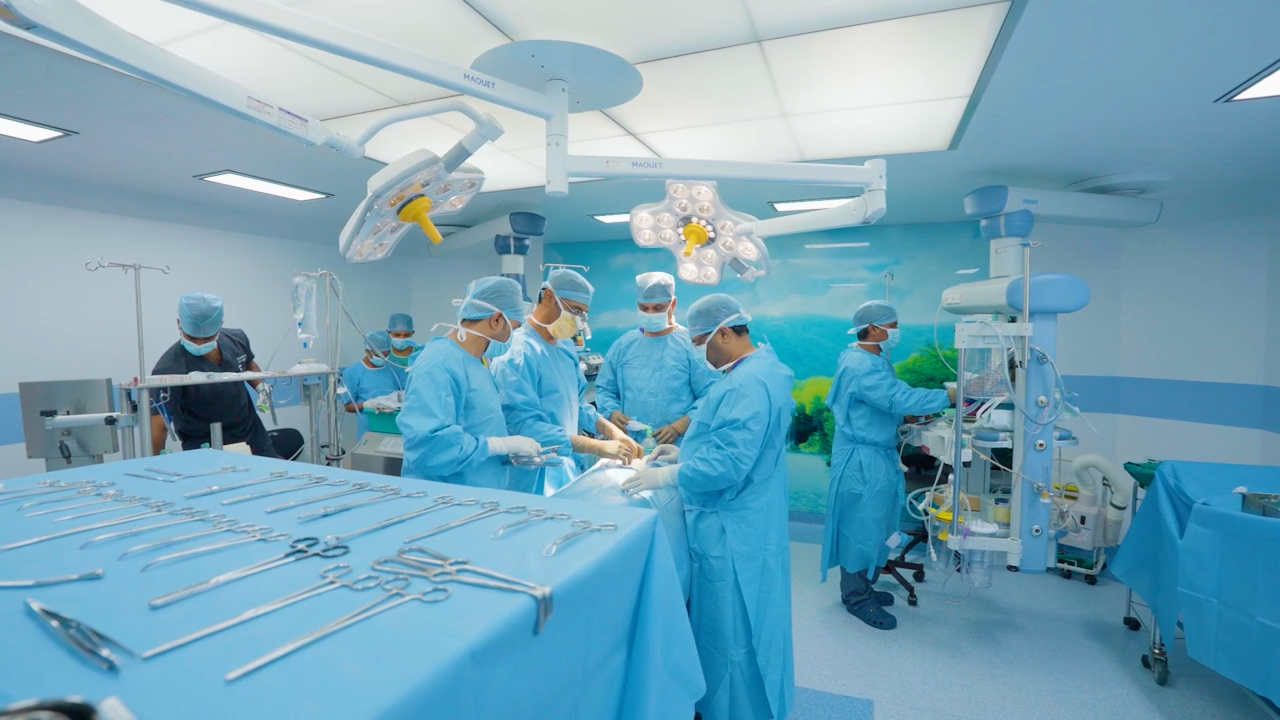
CABG bypass surgery at KG Hospital Coimbatore
When CABG is recommended
→Severe triple-vessel coronary artery disease
→Left main coronary artery disease
→Failed or recurrent stents (in-stent restenosis)
→Diabetes with multi-vessel disease
→Combined coronary + valve disease in one operation

All Four Bypass Surgery
Approaches at KG Hospital

Your cardiac surgeon will recommend the approach that best balances clinical outcome, risk profile, and recovery for your specific anatomy and condition. Each approach has distinct advantages.

01

Conventional CABG (On-pump)

Standard bypass surgery using the heart-lung machine (cardiopulmonary bypass). The heart is temporarily stopped while grafts are attached. Excellent clinical results across a wide range of patients. Most widely applicable approach.

Standard
03

MICS CABG — Small Incision

Bypass surgery through a 2–3 inch right chest incision, without sternotomy. Sternum never cut. Hospital stay 3–5 days, full recovery 3–4 weeks. Can be combined with valve surgery in one MICS procedure — an India first at KGH.

Faster recovery
04

Robotic CABG — Keyhole Bypass

Bypass surgery through 3–4 incisions under 1 cm using the Da Vinci robotic system. Most precise approach. Hospital stay 2–3 days, full recovery 1–2 weeks. India first: 6 grafts robotically — the most complex robotic bypass performed in India.

India First

OPCAB — Why Beating Heart
Bypass Surgery Matters

In conventional CABG, the heart is stopped and the heart-lung machine takes over circulation while the surgeon attaches the bypass grafts. The machine works well but introduces an inflammatory response from the blood interacting with the bypass circuit — which contributes to post-operative complications including stroke, kidney injury, and cognitive changes.

OPCAB (Off-Pump Coronary Artery Bypass) avoids this entirely. The surgeon operates on the beating, pumping heart, using specialised stabilisers that hold a small area of the heart still while the graft is being attached. The rest of the heart continues beating and pumping blood throughout.

This is technically more demanding — which is why not all centres offer it. KG Hospital’s surgical team performs both on-pump CABG and OPCAB, selecting the approach based on each patient’s specific risk factors.

OPCAB vs Conventional CABG
Heart-lung machine
OPCAB: Not used
On-pump: Required
Stroke risk
OPCAB: Lower
On-pump: Standard
Kidney protection
OPCAB: Better
On-pump: Standard
Blood transfusion
OPCAB: Less often
On-pump: More often
Best for
Elderly, kidney disease,
peripheral vascular disease

Bypass Graft Sources —
Where the New Vessels Come From

The bypass graft is a healthy blood vessel taken from another part of your body and used to create the new coronary artery pathway. Your surgeon selects the best graft source based on which arteries are blocked and the planned approach.

❄
Internal Mammary Artery (IMA) — Preferred
Taken from inside the chest wall. The gold standard graft — lasts 20+ years in most patients. The left IMA to left anterior descending artery (LAD) graft is the most important bypass graft performed in cardiac surgery.
👋
Radial Artery — Wrist
Taken from the wrist (radial artery). Excellent longevity — nearly as durable as the mammary artery. Preferred for younger patients and complex multi-vessel disease. A small scar on the wrist is the only visible sign.
🦵
Saphenous Vein — Leg
Taken from the inside of the leg. The most commonly used graft worldwide. Good results for 10–15 years. Preferred when multiple grafts are needed. A leg wound that heals within 2–3 weeks is the only visible result.

India First: Robotic CABG
with 6 Grafts

The most complex robotic bypass surgery ever performed in India — six separate coronary arteries bypassed in a single robotic operation at KG Hospital.

6
India First — Robotic CABG

Standard robotic CABG procedures typically involve 1–3 grafts. The conventional thinking was that robotic bypass beyond 3 grafts was impractical — too technically demanding, too long on bypass, too much positional adjustment required in the robotic ports.

KG Hospital’s cardiac surgery team performed 6 grafts robotically in a single operation — bypassing all six diseased coronary arteries through tiny keyhole incisions. This required pre-operative planning with 3D cardiac reconstruction, customised port positioning, and surgical precision that takes years of robotic cardiac experience to develop.

No other hospital in India had performed robotic CABG with 6 grafts before KG Hospital. This remains a national first.

Full Robotic Cardiac Surgery page →

Who Needs Bypass Surgery —
and Which Approach Is Right?

CABG is recommended when coronary disease is too severe or complex for angioplasty alone. The approach — conventional, OPCAB, MICS, or robotic — is chosen based on your anatomy, comorbidities, and recovery priorities.

✓  OPCAB Particularly Suited For
Elderly patients (70+) with higher stroke risk
Pre-existing chronic kidney disease
Peripheral vascular disease or atherosclerosis
Patients preferring to avoid the bypass machine
Diabetes with multi-vessel disease
✓  MICS or Robotic Suited For
Patients prioritising minimal scarring
Faster return to work or activity required
No previous chest surgery
Normal or near-normal BMI
CABG + valve surgery in one minimally invasive operation

Bypass Surgery Recovery —
All Four Approaches Compared

Recovery timelines vary significantly by approach. Your surgeon will set realistic expectations before surgery based on which technique is used.

Recovery Robotic CABG MICS CABG OPCAB Open CABG
Hospital stay2–3 days3–5 days5–7 days7–10 days
ICU stay12–24 hrs12–24 hrs1–2 days1–2 days
Full recovery1–2 weeks3–4 weeks4–6 weeks6–8 weeks
Return to work1–2 weeks3–4 weeks4–6 weeks6–8 weeks
Sternum cutNoNoYesYes

Recovery times are approximate and vary based on age, comorbidities, and number of grafts. Your surgeon will advise based on your individual assessment.
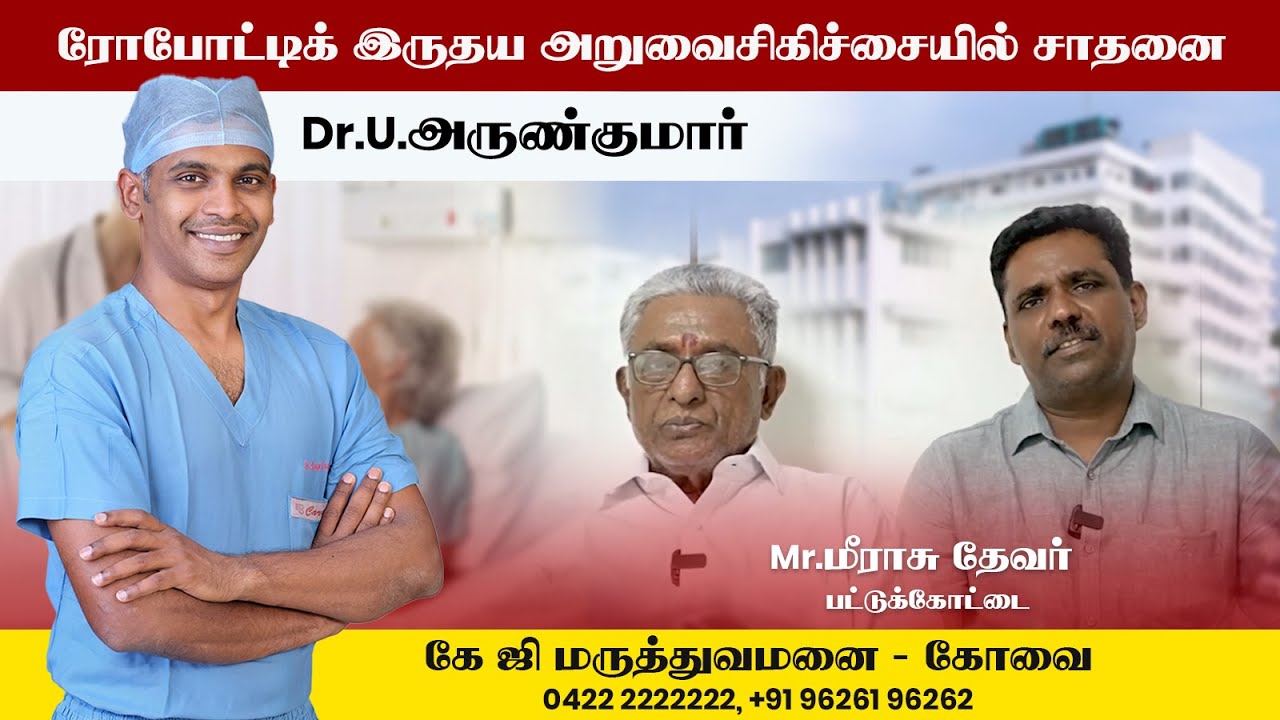
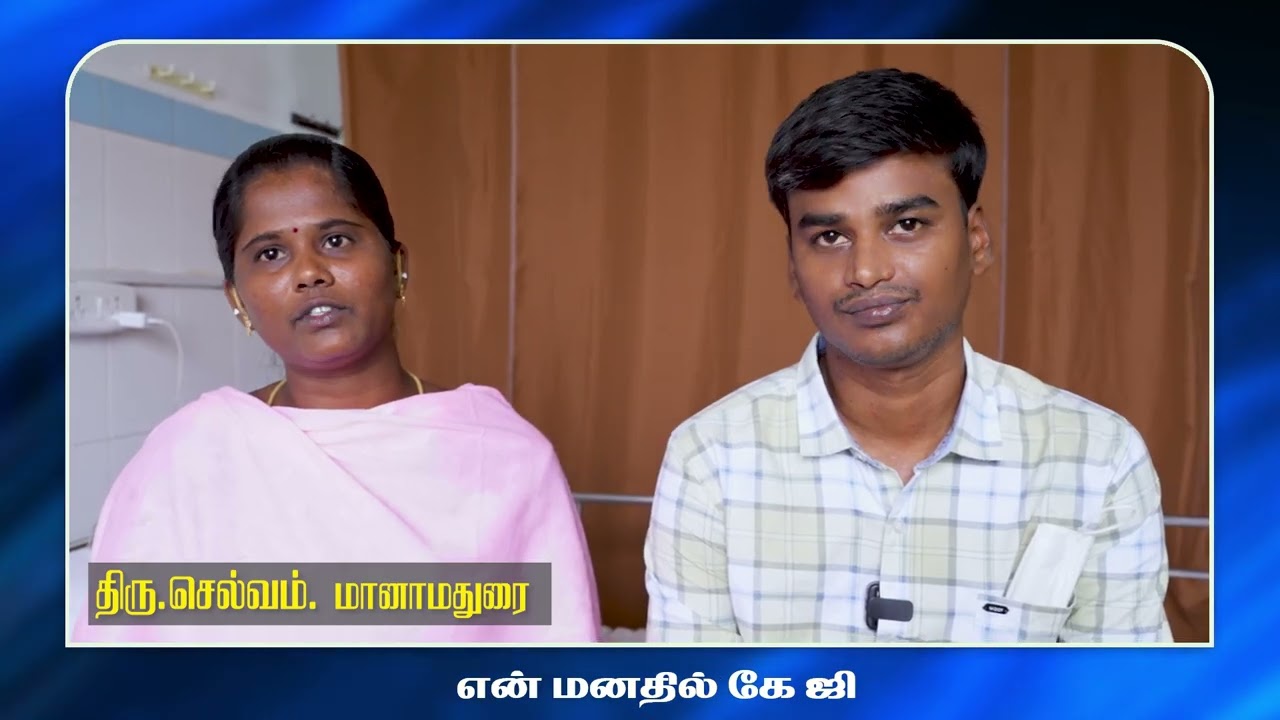
Patient Testimonials

Hear From Our
Bypass Surgery Patients

Real patient experiences from KG Hospital’s cardiac surgery programme. A dedicated bypass surgery testimonial is coming soon.

Best Heart Surgery Hospital in Coimbatore — Patient Experience
#Patientstory | Minimally Invasive Robotic Heart Surgery | KG Hospital
Best Heart Surgery Hospital in Coimbatore — Patient Experience
Best Heart Hospital, KG Hospital,Coimbatore

📺 More patient stories on our YouTube channel ↗

Cardiac Emergency? Call Immediately.

24/7 cardiac surgical emergency team on standby — call now.

FAQs

Bypass Surgery Questions

Call our team at 0422-2219191

Which is the best hospital for bypass surgery in Coimbatore?
+
KG Hospital is the best hospital for bypass surgery in Coimbatore — the only hospital in Coimbatore offering all four bypass surgery approaches: conventional CABG, OPCAB beating-heart surgery, MICS small-incision bypass, and Robotic CABG. KG Hospital holds an India first for Robotic CABG with 6 grafts — the most complex robotic bypass performed in India.
What is the difference between CABG and OPCAB?
+
CABG is conventional bypass surgery using the heart-lung machine to take over circulation while the surgeon operates on a stopped heart. OPCAB (Off-Pump) is performed on the beating heart without the heart-lung machine, using stabilisers to hold a small area still. OPCAB avoids the inflammatory response from the bypass circuit, significantly reducing stroke risk, kidney complications, and cognitive effects — particularly valuable for elderly patients.
What is the India first KG Hospital achieved in robotic bypass surgery?
+
KG Hospital performed First in India: Robotic CABG with 6 grafts — the most complex robotic bypass operation ever performed in India. Standard robotic CABG involves 1–3 grafts. KG Hospital’s surgical team bypassed all six diseased coronary arteries through tiny keyhole incisions in a single robotic operation. No other hospital in India had achieved this before.
How long is recovery after bypass surgery?
+
Recovery depends on the approach: Robotic CABG: 2–3 days hospital, 1–2 weeks full recovery. MICS CABG: 3–5 days, 3–4 weeks. OPCAB: 5–7 days, 4–6 weeks. Conventional open CABG: 7–10 days, 6–8 weeks. Your surgeon will advise based on your specific procedure and health status.
Can bypass surgery be combined with valve surgery?
+
Yes. KG Hospital regularly performs combined CABG + valve surgery in a single operation. This is available through both conventional open-heart and minimally invasive approaches. KG Hospital holds an India first for MICS mitral valve replacement combined with CABG — both procedures performed through a single small chest incision.
What is the best graft for bypass surgery?
+
The internal mammary artery (IMA) is the gold standard — it lasts 20+ years in most patients and is the preferred graft for the left anterior descending artery (LAD). The radial artery from the wrist is nearly as durable and preferred for younger patients. The saphenous vein from the leg is used when multiple grafts are needed. Your surgeon selects the best combination based on your anatomy and the number of arteries to bypass.
How do I book a bypass surgery consultation at KG Hospital?
+
Call 0422-2219191 or 0422-4042121. Cardiac Surgery OPD Monday to Saturday, 9 AM to 5 PM. No. 5 Government Arts College Road, Coimbatore 641018. 24/7 emergency cardiac care available.