Cardiac Surgery Procedures
Click any procedure to expand. From the world's most advanced robotic techniques to traditional open-heart surgery — we perform the complete spectrum.
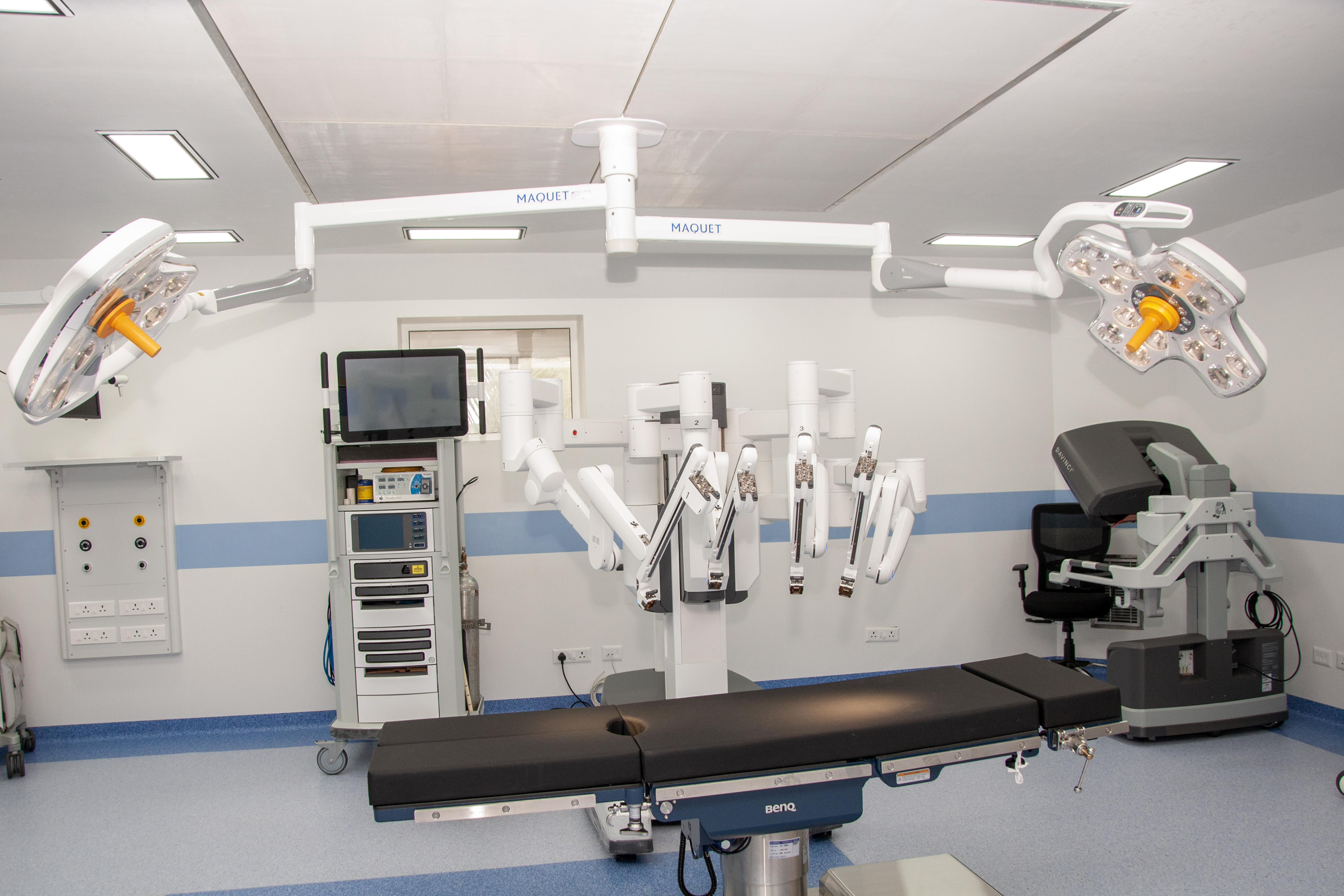
KG Hospital is the only hospital in Coimbatore performing Robotic Cardiac Surgery using the Da Vinci Surgical System. Surgery is performed through 3–4 keyhole incisions under 1 cm, with robotic arms providing sub-millimetre precision and 10× magnified 3D HD vision. Patients travel from across Tamil Nadu, Kerala, and other states specifically for robotic cardiac surgery at KG Hospital — no other centre in Coimbatore offers this.
- First in India: Robotic-assisted suture-less aortic valve replacement
- First in India: Robotic-assisted CABG with 6 grafts (most complex robotic bypass performed)
- First in India: Aortic valve replacement via Babliak technique
MICS performs the same complete open-heart operations as traditional surgery, but through a 2–3 inch incision on the right chest wall. The sternum (breastbone) is never cut or cracked. Full cardiac bypass is used — this is not a compromise. Clinical results are identical; recovery is dramatically faster.
- First in India: Transaxillary aortic & double valve replacement (MICS)
- First in India: MICS mitral valve replacement combined with CABG
- First in India: Awake Open Heart Surgery
- First in India: Aortic valve replacement via Babliak technique
CABG restores blood flow to blocked coronary arteries by grafting a new vessel to bypass the obstruction. KG Hospital performs both conventional on-pump CABG and OPCAB — Off-Pump Coronary Artery Bypass (beating-heart surgery). In OPCAB, the heart continues beating throughout; the heart-lung machine is never used. This eliminates the inflammatory response from bypass, reducing stroke, kidney injury, and cognitive complications — especially valuable for elderly patients.
KG Hospital repairs and replaces aortic, mitral, and tricuspid valves. Where clinically suitable, repair is preferred over replacement — natural valves perform better long-term and patients avoid lifelong blood thinners. When replacement is necessary, both biological (tissue) and mechanical valves are offered. MICS and robotic approaches are available, with multiple India firsts.
- First in India: Robotic suture-less aortic valve replacement
- First in India: Transaxillary aortic & double valve replacement (MICS)
- First in India: Aortic valve replacement via Babliak technique
KG Hospital performs surgical repair of ascending, arch, and descending aortic aneurysms, and emergency surgery for aortic dissection. The Bentall procedure (aortic root replacement) is performed for complex root pathology.
KG Hospital has a comprehensive heart transplant programme for end-stage heart failure patients. This includes pre-transplant evaluation, surgical transplantation, and long-term post-transplant management including immunosuppression monitoring, cardiac rehabilitation, and indefinite specialist follow-up.
KG Hospital performs corrective surgery for congenital heart defects including ASD, VSD, PDA, and Tetralogy of Fallot (TOF) in children. Surgery is available from childhood onwards by our cardiac surgical team. For high-volume neonatal or complex paediatric cases requiring dedicated paediatric cardiac units, we co-manage with specialist centres.
KG Heart Center's surgical team performs thoracic, vascular, and mediastinal procedures closely related to cardiac surgery.
Mechanical Circulatory Support (MCS) refers to devices that temporarily or permanently take over the pumping function of a failing heart — either to keep a critically ill patient alive while the heart recovers, or to sustain life as a bridge to transplant or as long-term destination therapy. KG Hospital provides the full spectrum of MCS.
- ECMO (VA & VV) — VA-ECMO for cardiogenic shock, post-cardiotomy failure & cardiac arrest; VV-ECMO for acute respiratory failure
- IABP — First-line counterpulsation in cardiogenic shock, high-risk PCI, and post-operative low cardiac output
- LVAD — Implantable pump for advanced left heart failure; bridge to transplant (BTT) or long-term destination therapy (DT)
- RVAD — Right heart support after LVAD implantation, cardiac surgery, or acute right ventricular infarction
- BiVAD — Simultaneous left and right ventricular support for total cardiac failure