Dr. Arunkumar Ulaganathan
Robotic & Minimally Invasive Cardiothoracic Surgeon, KG Hospital, Coimbatore.
When it comes to treating severe heart conditions, modern medical advancements have revolutionized patient recovery and surgical precision. Traditional open-heart surgery often requires cutting the sternum, leading to prolonged hospital stays and extensive breastbone healing time. Today, minimally invasive robotic cardiac surgery is changing the narrative.
At KG Heart Center, robotic procedures allow for hospital discharge in just 2–3 days and full recovery in 1–2 weeks, allowing most patients to return to office work within two weeks — compared to 7–10 days in hospital and 6–8 weeks of full recovery typical for open-heart surgery.
What Is Robotic Heart Surgery?
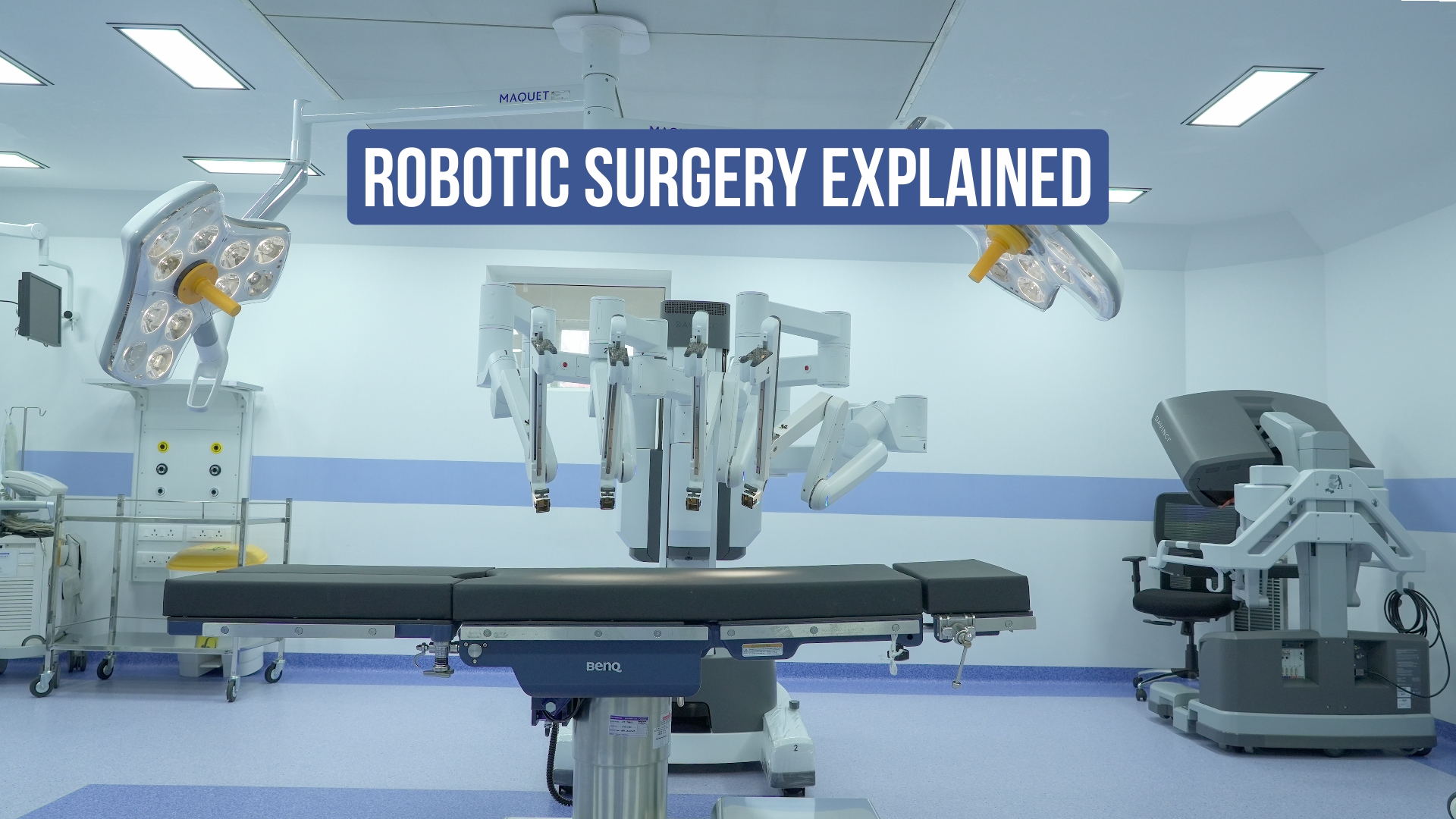
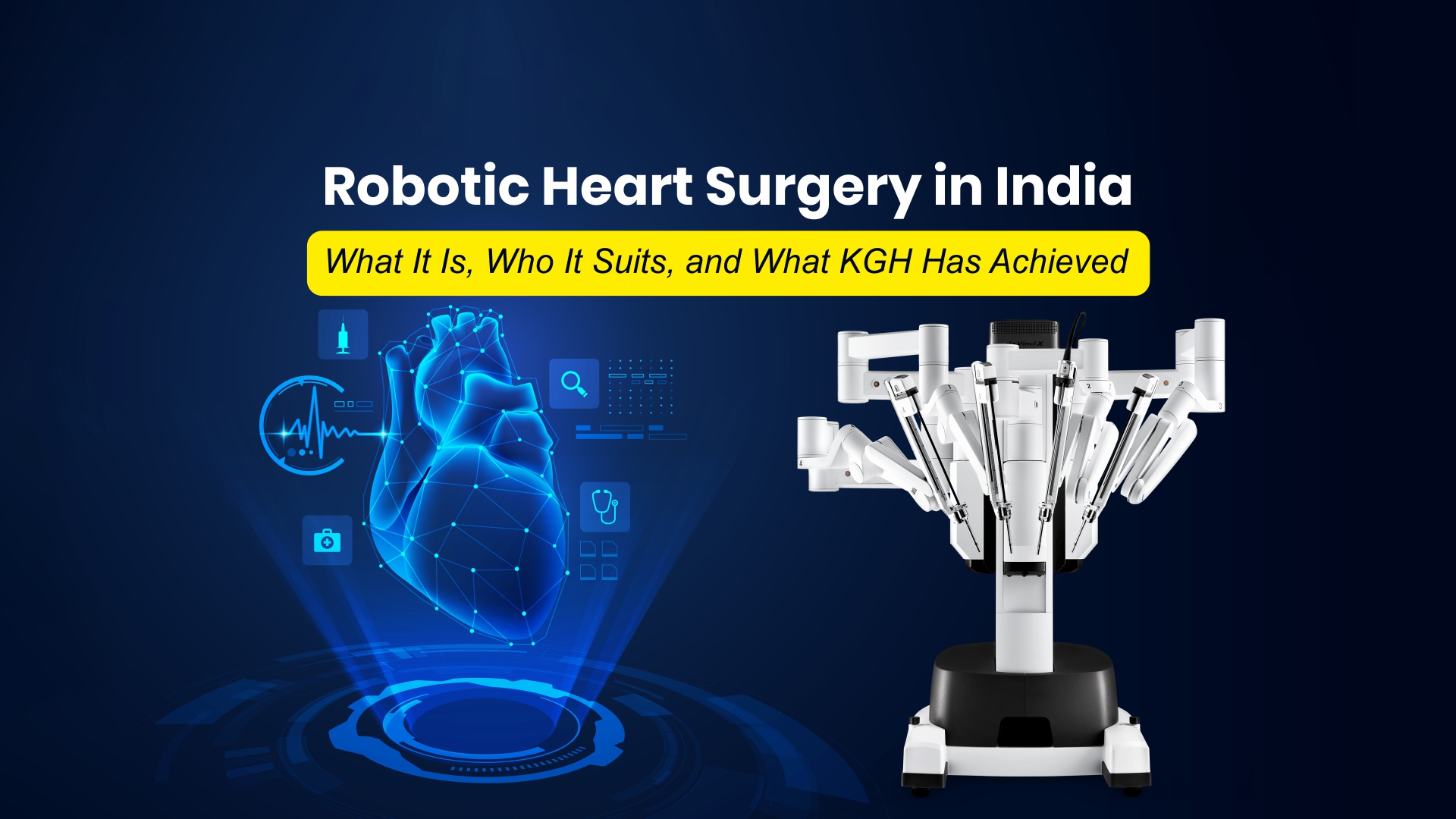
Robotic heart surgery is a highly advanced, minimally invasive approach where cardiac surgeons use robotic arms controlled from a console to perform complex heart surgeries. Because the sternum is never cut, there is no breastbone healing time. The robotic system provides a high-definition 3D view and precision that ensures maximum safety and minimal trauma to the body.
"The sternum is never cut during robotic surgery, meaning our patients avoid the painful breastbone healing process entirely and return to their normal lives in a fraction of the time."
KGH's 3 India Firsts
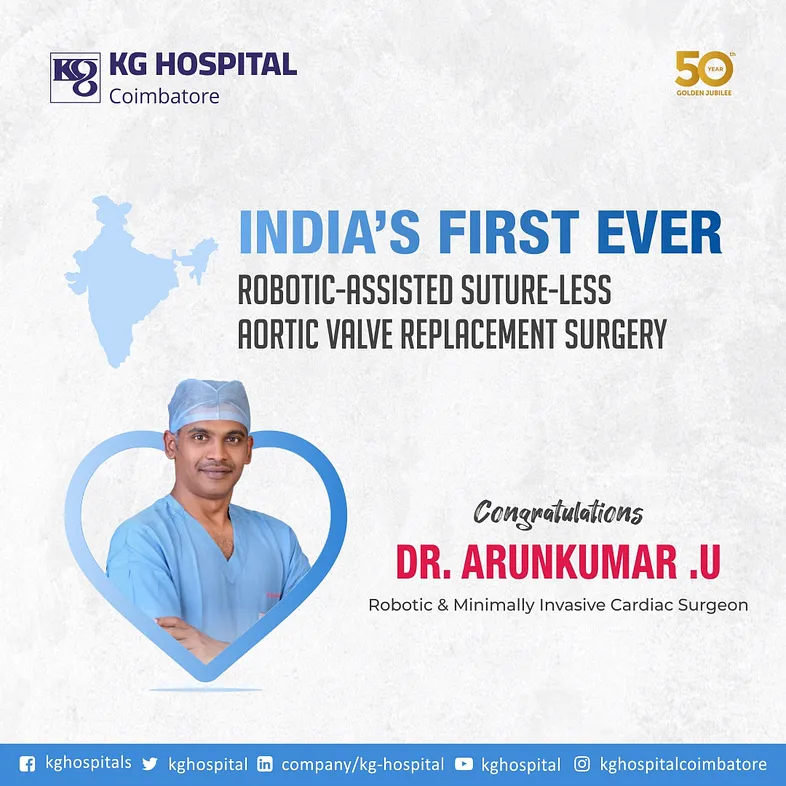
Under the expertise of Dr. Arunkumar Ulaganathan and the dedicated cardiac team, KG Hospital has achieved 3 India Firsts in the field of robotic cardiac surgery, cementing its status as a pioneer in advanced quaternary cardiac care.
Robotic Surgery vs. MICS
While both are minimally invasive alternatives to traditional open-heart surgery:
- MICS (Minimally Invasive Cardiac Surgery): Uses small "keyhole" incisions instead of a full sternotomy, with the surgeon operating specialized elongated manual instruments.
- Robotic Surgery: Takes MICS a step further, using even smaller incisions (often just a few millimeters) and robotic arms that offer 360-degree articulation — far beyond human wrist capabilities — yielding superior precision and faster recovery times.
Who Is Suitable?
Robotic surgery is ideal for patients requiring valve repairs, bypasses, or defect closures who want to avoid the trauma of traditional open-heart surgery. A thorough evaluation by cardiac specialists determines whether a patient's anatomical and clinical profile makes them a candidate.
| Metric | KGH Robotic Cardiac Surgery |
|---|---|
| Procedures Performed | 200+ |
| Success Rate | 100% |
| India Firsts | 3 |
| Hospital Stay | 2–3 days |
| Full Recovery | 1–2 weeks |
Why KG Hospital?
Choosing KG Hospital means gaining access to a 24/7 standby cardiac surgical team, cutting-edge robotic technology, and a comprehensive cardiac program tailored for rapid, safe recovery.