Best Cardiology Hospital in Coimbatore

Cardiology — KG Heart Center
KG Heart Center — Coimbatore

Best Cardiology
Hospital in Coimbatore

Expert non-surgical heart care — from routine angioplasty and TAVI to complex CTO intervention, heart failure management, and 24/7 emergency cardiac care. State-of-the-art Cath Lab with OCT and FFR.

Advanced Cath Lab — Coimbatore’s Best
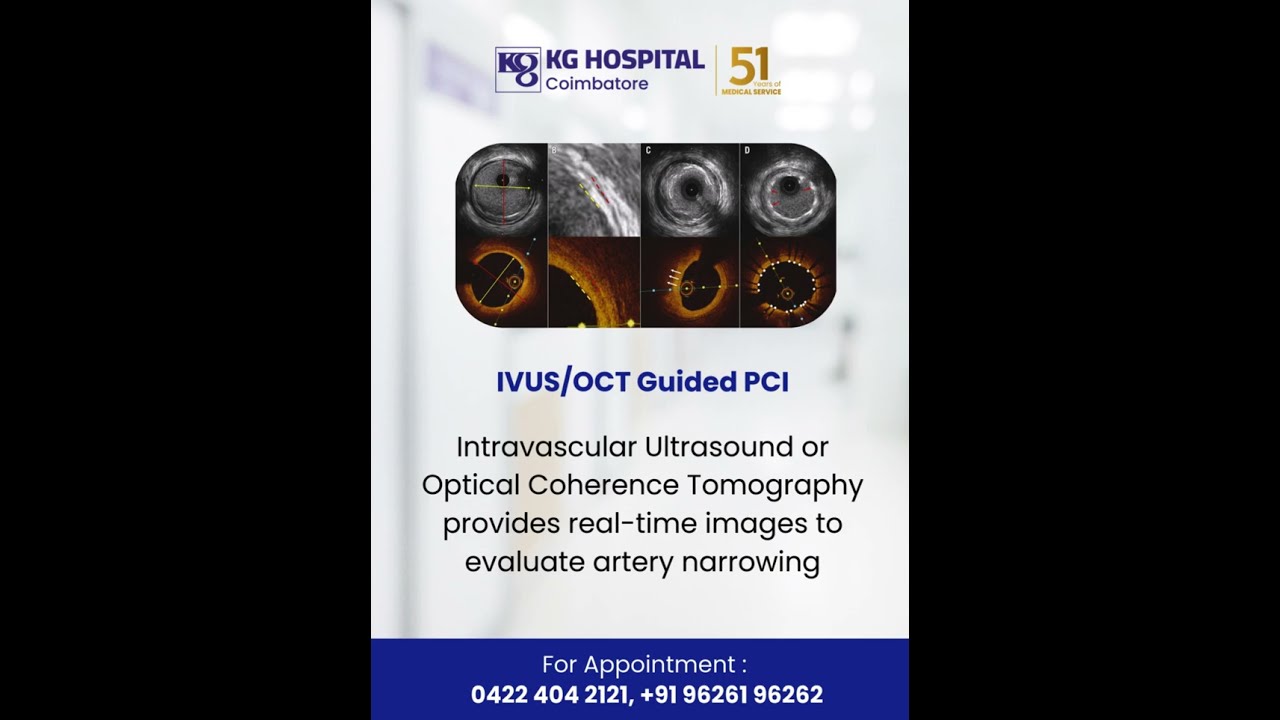
OCT — Optical Coherence Tomography
Highest-resolution intravascular imaging (10–20 microns)
FFR — Fractional Flow Reserve
Functional blockage assessment — only treat what needs treating
TAVI — Non-surgical Valve Replacement
For high-risk and elderly patients with aortic stenosis
Rotablation & IVL Lithotripsy
For severely calcified lesions — complex PCI made possible
24/7 Emergency Angioplasty
Door-to-balloon time <90 minutes — every day
2 state-of-the-art Cath Labs — full technology list →
24/7
<90minDoor-to-balloon for heart attack
Advanced
2State-of-the-art Cath Labs
Technology
OCTHighest-res intravascular imaging
Full Spectrum
12+Cardiology procedures & diagnostics
Procedures & Treatments

Cardiology Procedures

The complete range of non-surgical cardiac diagnosis and treatment — from routine angioplasty to advanced structural heart procedures. Click any procedure to expand.

01
Coronary Angioplasty & Complex PCI
PTCA, Bifurcation, CTO, OCT & FFR-guided intervention
Advanced Cath Lab
+

Coronary Angioplasty (PTCA) opens blocked coronary arteries using a balloon catheter and stent. KG Hospital’s interventional cardiologists perform the full range of complex PCI — including procedures that many centres in the region cannot offer. Our Cath Lab is equipped with OCT and FFR, enabling precision-guided stenting that produces better long-term outcomes and avoids unnecessary procedures.

Advanced PCI Capabilities
  • Bifurcation Stenting — treating artery branch points where two vessels meet
  • CTO Intervention — opening arteries completely blocked for 3+ months
  • OCT-guided Stenting — real-time imaging inside arteries for precise placement
  • FFR-guided PCI — only stent blockages that genuinely restrict blood flow
  • Drug-eluting Stents — latest generation for lowest restenosis rates
Minimally invasive — through groin or wrist artery
Same-day or overnight procedure in most cases
OCT imaging ensures optimal stent expansion
FFR prevents unnecessary stenting procedures
Rotablation & IVL for heavily calcified lesions
24/7 emergency angioplasty for heart attacks
Post-procedure cardiac rehab programme available
02
TAVI — Transcatheter Aortic Valve Implantation
Non-surgical valve replacement for high-risk patients
No Open Surgery
+

TAVI replaces a diseased aortic valve without open-heart surgery. A new valve is delivered through a catheter — usually via the femoral artery in the groin (transfemoral approach) or through a small chest incision (transapical). The heart continues beating throughout. TAVI is the treatment of choice for elderly patients and those with high surgical risk who cannot safely undergo traditional valve replacement surgery.

A multidisciplinary Heart Team — cardiologists, cardiac surgeons, and anaesthetists — assesses each patient to confirm they are suitable for TAVI and determines the optimal approach and valve type.

No open-heart surgery — catheter-based procedure
Heart continues beating throughout
Transfemoral (groin) or transapical (chest) approach
Hospital stay: 2–4 days vs 7–10 days open surgery
Faster recovery — most patients mobile within days
Suitable for high-risk and elderly patients
Avoids long-term anticoagulation in most cases
03
Pacemaker, CRT & ICD Implantation
Full range of cardiac rhythm management devices
Full Device Range
+

KG Hospital offers the complete range of cardiac device implantation — from standard single-chamber pacemakers to advanced leadless devices and conduction system pacing. Our electrophysiologists implant devices for bradycardia (slow heart rate), heart block, heart failure (CRT), and life-threatening arrhythmia (ICD). Post-implant remote monitoring is available.

Device Types Available
  • Single-chamber and Dual-chamber Pacemakers — standard rhythm support
  • Leadless Pacemaker — no leads, lower infection risk, minimally invasive
  • HIS Bundle Pacing — stimulates the heart’s natural conduction pathway
  • LBBB Pacing — for patients with left bundle branch block conduction delay
  • CRT — Cardiac Resynchronization Therapy — for heart failure with dyssynchrony
  • ICD — Implantable Cardioverter Defibrillator — prevents sudden cardiac death
Minimally invasive procedure under local anaesthesia
Day case or overnight stay for most implants
Remote monitoring for seamless follow-up
Battery replacement and device upgrades available
Post-implant device programming and optimisation
CRT improves symptoms in 60–70% of heart failure patients
04
Advanced Heart Failure Clinic
CRT, ICD, LVAD, cardiac rehab and transplant evaluation
Multidisciplinary
+

KG Hospital’s Advanced Heart Failure Clinic provides specialist care for patients with chronic and advanced heart failure. The clinic operates a true multidisciplinary model — cardiologists, cardiac surgeons, electrophysiologists, physiotherapists, dieticians, and clinical psychologists working together around each patient.

For patients with end-stage heart failure not responding to medical therapy, the clinic offers LVAD implantation as a bridge to transplant or as destination therapy, and evaluates patients for heart transplantation in collaboration with KG Hospital’s cardiac surgery programme.

Personalised heart failure management plans
CRT — improves heart synchrony and ejection fraction
ICD — continuous monitoring, treats life-threatening rhythms
LVAD — mechanical circulatory support for advanced failure
Cardiac rehabilitation and exercise prescription
Dietician-led nutrition and fluid management
Heart transplant evaluation and referral
05
Electrophysiology & Arrhythmia Management
Ablation, EPS studies, AF treatment, rhythm disorders
EP Specialists
+

KG Hospital’s electrophysiology team diagnoses and treats the full range of heart rhythm disorders — from benign palpitations to life-threatening ventricular arrhythmias. Electrophysiology studies (EPS) map the heart’s electrical system to pinpoint the exact source of an arrhythmia. Catheter ablation then destroys the abnormal tissue causing the problem — often offering a permanent cure.

Electrophysiology studies (EPS) — full rhythm mapping
AF ablation — treatment for atrial fibrillation
SVT, VT, and flutter ablation
Holter monitoring to capture intermittent arrhythmias
All pacemaker and ICD procedures (see above)
Performed in our advanced Cath Lab
06
Preventive Cardiology & Heart Attack Risk
Risk assessment, lifestyle modification, the Loading Dose protocol
+

Prevention is central to KG Hospital’s cardiac philosophy. Our cardiologists work with patients to identify and manage all modifiable risk factors — hypertension, diabetes, dyslipidaemia, smoking, obesity, and physical inactivity — through a combination of lifestyle guidance and medication, before intervention becomes necessary.

❤ Loading Dose — First-Aid for Heart Attack

KG Hospital Chairman Dr G. Bakthavathsalam’s globally recognised first-aid protocol for suspected heart attack — to be taken immediately while waiting for emergency care:

Aspirin 350 mg
Atorvastatin 80 mg
Clopidogrel 150 mg

This combination limits heart muscle damage in the critical window before angioplasty. After taking the Loading Dose, call 0422-2219191 and seek emergency care immediately. Do not delay.

Hypertension monitoring and management
Diabetes and cardiac risk co-management
Dyslipidaemia — cholesterol and lipid control
Smoking cessation programme
Exercise prescription and cardiac fitness
Nutrition counselling and weight management
Coronary calcium scoring for CAD risk stratification
07
Device Closure for Congenital Heart Disease
ASD · PFO · VSD · PDA — catheter-based, no open surgery
No Open Surgery
+

A catheter-based technique to seal congenital heart defects without open-heart surgery. A small Amplatzer occluder device is delivered through the femoral vein, guided by real-time echocardiography and fluoroscopy, and deployed to permanently seal the defect. Performed for both paediatric and adult patients following multidisciplinary Heart Team assessment.

Four Conditions Treated
  • ASD — hole between upper chambers; closure prevents pulmonary hypertension and right heart failure. Indicated when defect ≥10 mm or right heart overload is present.
  • PFO — flap opening in atrial septum present in ~25% of adults; closure indicated in cryptogenic stroke patients aged 18–60, significantly reducing recurrent stroke risk.
  • VSD — hole between lower chambers; Amplatzer occluder eliminates left-to-right shunt and avoids cardiopulmonary bypass entirely.
  • PDA — vessel that fails to close after birth; Amplatzer duct occluder or coil embolisation is now standard of care, replacing surgical ligation.
No open-heart surgery — catheter through femoral vein
Guided by real-time echo and fluoroscopy
Single overnight stay in most cases
Suitable for paediatric and adult patients
Local anaesthesia or sedation — no general anaesthesia in most adults
Antiplatelet therapy for 6 months; no long-term anticoagulation
Echo follow-up at 1, 6, and 12 months post-procedure
Multidisciplinary Heart Team assessment for every patient
Cardiac Diagnostics

Advanced Cardiac Diagnostic Tests

Precise diagnosis is the foundation of effective cardiac care. KG Hospital’s diagnostic suite covers every modality — from bedside ECG to 3T Cardiac MRI and invasive coronary angiography.

Non-invasive

ECG — Electrocardiogram

Records the heart’s electrical activity. Detects arrhythmias, heart attacks, ischaemic changes, and monitors pacemaker function. Results in under 10 minutes.

Non-invasive

Holter Monitoring (24–72 hrs)

Continuous ECG recording for 24 hours to 7 days. Captures intermittent arrhythmias — including palpitations, syncope, and silent ischaemia — missed by a standard ECG.

Non-invasive

Echocardiogram — 2D, 3D, TEE, Doppler

Ultrasound imaging of heart structure and function. Includes Transthoracic (TTE), Transoesophageal (TEE), Stress Echo, Doppler, and 3D Echo for complete cardiac assessment.

Stress Testing

Treadmill Test (TMT) & Stress Echo

Assesses the heart’s response to exertion. TMT with ECG monitoring, or Pharmacologic Stress Echocardiography for patients unable to exercise. Identifies ischaemia under load.

Invasive

Coronary Angiogram

X-ray imaging of coronary arteries using contrast dye. Uses Digital Subtraction Angiography for high-resolution visualisation of blockages and stenosis. Gold standard for CAD diagnosis.

Cath Lab

OCT — Optical Coherence Tomography

Highest-resolution intravascular imaging at 10–20 microns. Real-time imaging inside coronary arteries for precise stent sizing, deployment assessment, and plaque characterisation.

Cath Lab

FFR — Fractional Flow Reserve

Measures pressure across a coronary lesion to determine if it truly restricts blood flow. Ensures stenting is performed only when clinically necessary — avoiding unnecessary procedures.

Imaging

128-Slice Cardiac CT (CCTA)

Non-invasive coronary CT Angiography, coronary calcium scoring, and cardiac function assessment. Pre-TAVI planning and surgical anatomy mapping. No catheterisation required.

Imaging

3T Cardiac MRI

Highest-field-strength cardiac MRI. Myocardial viability and perfusion imaging, cardiomyopathy assessment, congenital heart disease. No ionising radiation — safe for repeat imaging.

Blood Tests

Cardiac Biomarkers Panel

High-sensitivity Troponin for heart attack detection. CK-MB, Myoglobin, BNP for heart failure severity. Rapid turnaround in KG Hospital’s NABL-accredited laboratory.

Invasive

Cardiac Catheterisation & Haemodynamics

Right and left heart catheterisation to measure pressures and cardiac output. Endomyocardial biopsy for myocarditis. Haemodynamic studies for valvular and pulmonary hypertension.

The Cardiology Team

Cardiologists & Specialists

Interventional cardiologists, electrophysiologists, and non-invasive cardiologists — all specialised in cardiac medicine.

View All Doctors →
🫠
Interventional Cardiologists — Angioplasty · TAVI · CTO · Complex PCI
DR. NITHIYAAN P
DR. NITHIYAAN P
Interventional Cardiologist
MD.,DNB(Card).,FIC (IC)
Book Appointment →
DR. RANJITH R
DR. RANJITH R
Interventional Cardiologist
MBBS,.MD(General Medicine),.DM(Cardiology),.DNB(Cardiology)
Book Appointment →
DR. SARAVANAN E
DR. SARAVANAN E
Interventional Cardiologist
MD.,DNB(Card).,FIC (IC)
Book Appointment →
Electrophysiologists — Arrhythmia Ablation · Pacemaker · ICD · HIS Pacing
DR. MUTHIAH SUBRAMANIAN
Interventional Cardiologist
M.D.,D.M.,P.D.F.,M.R.C.P.(uk),F.R.C.P.(Edin.)
Book Appointment →
💉
Non-Invasive Cardiologists — Echo · Preventive Cardiology · Heart Failure
DR. RAO Y.Y
DR. RAO Y.Y
Chief Cardiologist
MBBS,MD, DM (Cardiology)
Book Appointment →
DR. BALASUBRAMANIAN C
Cardiologist
MBBS,MD, DM (Cardiology)
Book Appointment →
Patient Testimonials

What Our Cardiology
Patients Say

Real patient feedback on cardiology treatment at KG Hospital — angioplasty, TAVI, pacemaker, and heart failure management.

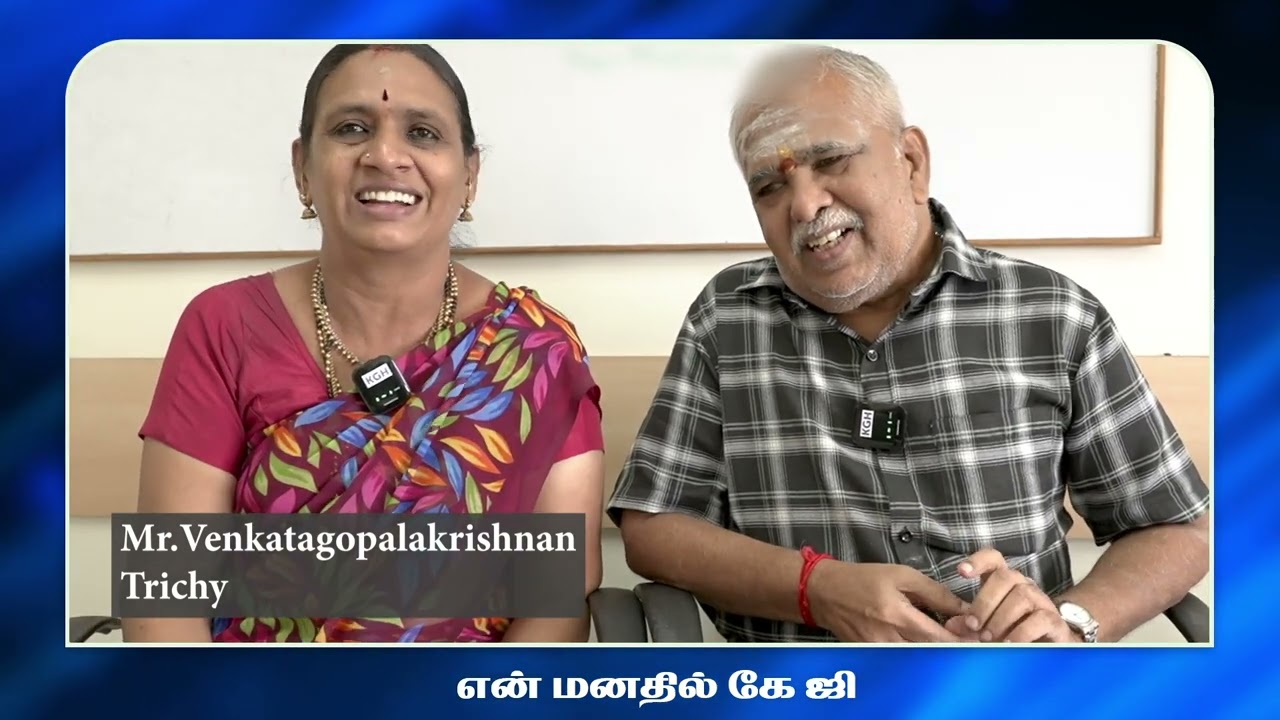
Best Cardiology Hospital in Coimbatore — Patient Feedback
Best Heart Hospital in Coimbatore City

📺 More patient stories on our YouTube channel ↗

Cardiac Emergency? Call Immediately.

24/7 emergency cardiac team on standby. Chest pain, palpitations, or suspected heart attack — call now. Immediate angioplasty available.

FAQs

Cardiology Questions

Call our cardiology team at 0422-2219191 for any question.

Which is the best cardiology hospital in Coimbatore?
+
KG Hospital is the best cardiology hospital in Coimbatore, with an advanced Cath Lab offering OCT, FFR, TAVI, Rotablation, and Intravascular Lithotripsy — among the most advanced interventional cardiology technology in South India. 24/7 emergency angioplasty with door-to-balloon time under 90 minutes, and two state-of-the-art Cath Labs.
What is TAVI and is it available at KG Hospital?
+
TAVI (Transcatheter Aortic Valve Implantation) replaces a diseased aortic valve without open-heart surgery, using a catheter through the groin. It is the treatment of choice for elderly or high-risk patients with severe aortic stenosis. Yes, TAVI is available at KG Hospital in our advanced Cath Lab, performed by an experienced multidisciplinary Heart Team.
What is OCT-guided angioplasty and why is it better?
+
OCT (Optical Coherence Tomography) provides the highest-resolution imaging available inside coronary arteries — at 10 to 20 microns. During angioplasty, it allows our cardiologists to see exactly where a stent is placed, confirm it is fully expanded, and check the artery walls for any complications. This precision reduces restenosis (re-narrowing) and significantly improves long-term outcomes compared to angiography guidance alone.
What is the Loading Dose and how does it help in a heart attack?
+
The Loading Dose is a first-aid protocol developed by KG Hospital Chairman Dr G. Bakthavathsalam for use during a suspected heart attack before reaching hospital: Aspirin 350mg + Atorvastatin 80mg + Clopidogrel 150mg. This combination limits blood clotting and arterial inflammation, reducing the amount of heart muscle damaged in the critical window before angioplasty. After taking it, call 0422-2219191 and seek emergency care immediately.
Does KG Hospital treat advanced heart failure?
+
Yes. KG Hospital has a dedicated Advanced Heart Failure Clinic offering Cardiac Resynchronization Therapy (CRT), Implantable Cardioverter Defibrillators (ICD), Left Ventricular Assist Devices (LVAD), cardiac rehabilitation, and evaluation for heart transplantation — for patients with advanced or end-stage heart failure not responding to medication.
What pacemaker options are available at KG Hospital?
+
KG Hospital offers the full range of cardiac rhythm management devices: single-chamber and dual-chamber pacemakers, leadless pacemakers (no wires, lower infection risk), HIS bundle pacing (using the heart’s natural conduction system), LBBB pacing, CRT (Cardiac Resynchronization Therapy), and ICDs (Implantable Cardioverter Defibrillators). Post-implant remote monitoring is also available.
How do I book a cardiology appointment at KG Hospital?
+
Call 0422-2219191 or 0422-4042121. Cardiology OPD runs Monday to Saturday, 9 AM to 5 PM. For cardiac emergencies, we are available 24 hours a day, 7 days a week. KG Hospital is at No. 5, Government Arts College Road, Coimbatore 641018.